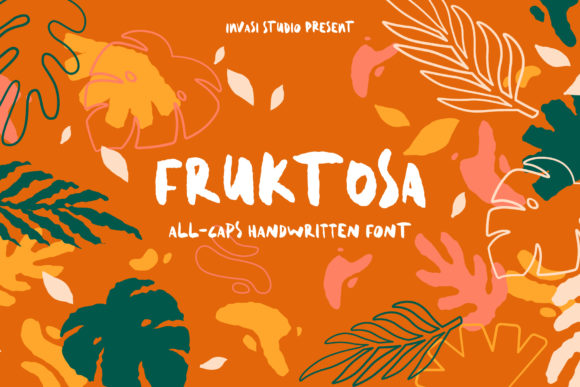
Fruktosa: A Playful Yet Professional Display Font for Modern Design Workflows
Fruktosa is a display font that stands out in the crowded world of typography. With its thick, bold letterforms and playful character, it offers a unique blend of strength and whimsy. This font isn’t just visually appealing—it’s also highly functional when integrated into design workflows. Whether you're crafting a brand identity, designing a website, or creating promotional materials, Fruktosa can add a distinctive touch without overwhelming the overall composition.
Understanding Fruktosa's Role in Design Processes
Fruktosa is more than just a font; it's a tool that enhances visual storytelling. Its design allows it to be used in both subtle and bold ways, depending on the project’s needs. For instance, in branding, Fruktosa can serve as a signature font that reflects a company’s personality—modern, approachable, and dynamic. In digital design, it works well with minimalistic layouts where attention to detail matters.
The font’s versatility makes it suitable for a variety of stages in the design process. It can be used during brainstorming sessions to sketch out ideas quickly, or during final touches to elevate the look of a project. Understanding how Fruktosa fits into different phases of a workflow helps designers make informed choices about when and how to apply it.
When to Use Fruktosa in Your Workflow
Fruktosa shines in scenarios where a strong visual impact is needed without sacrificing readability. Here are some practical use cases:
- Branding Projects: Ideal for logos, taglines, and packaging designs where a memorable visual element is crucial.
- Marketing Materials: Perfect for social media posts, banners, and advertisements that require eye-catching headlines.
- Website Headers: Can be used as a headline font to draw attention while maintaining a clean layout.
- Print Media: Works well in brochures, posters, and magazines where a bold, modern aesthetic is desired.
- Collaborative Design: Useful in team environments where a shared visual language can streamline communication and alignment.
By recognizing these use cases, designers can strategically incorporate Fruktosa into their projects, ensuring it complements rather than overshadows the overall message.
Integrating Fruktosa with Other Tools and Platforms
Fruktosa is not a standalone solution—it thrives when paired with other design tools and platforms. Whether you're working in Adobe Creative Suite, Canva, or even a simple text editor, Fruktosa can be easily implemented. Its compatibility with most design software ensures that it doesn’t limit your creative possibilities.
One key consideration is font pairing. While Fruktosa is bold and stylized, it should be balanced with more neutral fonts for body text. This creates a harmonious contrast that improves readability and visual balance. For example, using a sans-serif font like Montserrat or Roboto alongside Fruktosa can create a professional yet engaging design.
Additionally, Fruktosa performs well across different screen sizes and resolutions. This is particularly important for web design, where responsiveness is critical. Testing how the font renders on various devices ensures that the visual impact remains consistent regardless of the platform.
Practical Implementation Tips
Implementing Fruktosa into your workflow requires some preparation and planning. Here are a few tips to help you integrate it smoothly:
- Font Licensing: Ensure that you have the appropriate license for commercial use if you plan to use Fruktosa in client projects or for public-facing content.
- Font Weight and Size: Experiment with different weights and sizes to find the optimal balance between visibility and subtlety.
- Color Contrast: Pair Fruktosa with colors that provide good contrast, making sure the text remains legible against any background.
- Consistency: Maintain consistency in how Fruktosa is used across all elements of a project to avoid visual clutter and confusion.
- Testing: Always test the font in real-world scenarios to ensure it functions as intended in different contexts.
These steps not only enhance the effectiveness of Fruktosa but also contribute to a more organized and efficient workflow.
Long-Term Use and Quality Control
When considering long-term use of Fruktosa, it’s important to evaluate its sustainability within your design practices. Fonts like Fruktosa are best suited for specific applications rather than being used universally. Overuse can lead to visual fatigue and diminish its impact over time.
Quality control is another essential aspect. Regularly reviewing how Fruktosa is applied in past projects helps identify patterns and areas for improvement. This practice ensures that the font continues to deliver value while maintaining a high standard of design integrity.
Moreover, staying updated with new versions or updates of the font can introduce additional features or improvements that may enhance its performance in future projects. Keeping an eye on font releases and community feedback can provide insights into how Fruktosa evolves and adapts to changing design trends.
Conclusion
Fruktosa is a powerful addition to any designer’s toolkit. Its unique style and functionality make it ideal for a wide range of design tasks. By understanding its strengths and limitations, and by integrating it thoughtfully into your workflow, you can unlock new creative possibilities while maintaining a cohesive and professional design language.