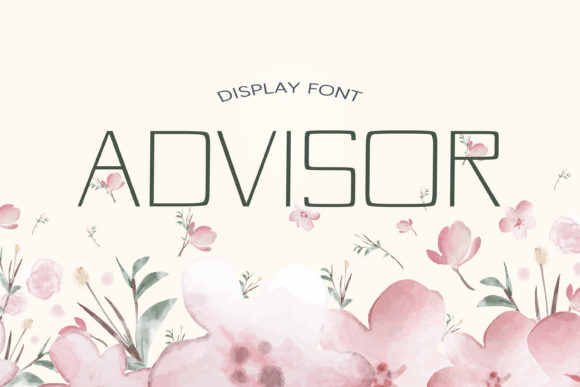
Advisor: A Powerful Tool for Streamlining Decision-Making and Workflow
Advisor is more than just a font—it’s a strategic asset that can elevate the clarity, impact, and professionalism of your branding, design, and communication efforts. As a modern, all-caps display typeface with exaggerated and squared characters, Advisor stands out in a crowded digital landscape. Its bold, structured form makes it ideal for applications where visibility and legibility are key. Whether you're designing a striking poster, crafting a compelling brand identity, or developing a user interface for an app, Advisor can help you communicate with confidence and authority.
Understanding Advisor and Its Role in Design Workflows
Advisor is designed to be both functional and visually engaging. Its clean lines and strong character shapes make it highly readable even at smaller sizes, which is crucial for web and mobile interfaces. Unlike many display fonts that are meant for occasional use, Advisor is built for consistency and reliability across various mediums. This makes it a versatile choice for both creative and practical applications.
In a typical design workflow, Advisor can serve as a visual anchor. For instance, when creating a brand guideline document, using Advisor for headings and key terms helps reinforce the brand’s voice and visual identity. It also works well in presentations, infographics, and marketing materials where a strong, memorable font can capture attention and convey purpose.
Where Advisor Fits in the Broader Process
Advisor is not limited to a single stage of a project. It can be used before, during, or after the creative process, depending on the goal. In the planning phase, it can help define a clear visual direction by setting a tone through typography. During execution, it ensures consistency across all deliverables. And in post-production, it maintains brand integrity by reinforcing the visual language throughout the final output.
Its adaptability means it can integrate seamlessly with other tools and platforms. Whether you’re working in Adobe Creative Suite, Figma, or Canva, Advisor’s compatibility with most design software allows for easy implementation. This flexibility ensures that it can be part of a broader toolkit rather than an isolated element.
Practical Applications of Advisor in Real-World Scenarios
Let’s explore how Advisor can be applied in different contexts. For example, in content creation, using Advisor for headlines and subheadings can help structure information in a way that’s both engaging and easy to follow. This is especially useful for bloggers, educators, and marketers who need to convey complex ideas clearly.
In business settings, Advisor can enhance the professionalism of reports, proposals, and presentations. Its strong presence ensures that key messages are emphasized without overwhelming the reader. When paired with complementary fonts for body text, it creates a balanced and effective typographic hierarchy.
For small businesses and startups, Advisor can play a role in building brand recognition. By consistently using it across all touchpoints—website headers, social media posts, print materials—it reinforces a cohesive brand identity that is both memorable and trustworthy.
Integration with Other Tools and Resources
The true power of Advisor lies in its ability to work alongside other tools and methods. When combined with project management software like Trello or Asana, it can help streamline communication and documentation. For instance, using Advisor in task labels or milestone markers can improve visibility and clarity within a team environment.
Similarly, in educational settings, Advisor can be used to highlight important concepts or instructions in lesson plans, study guides, and interactive learning modules. Its bold appearance makes it ideal for emphasizing key takeaways without distracting from the overall content.
When integrating Advisor into existing workflows, consider its compatibility with different file formats and platforms. Whether you're working with HTML, PDFs, or vector graphics, ensuring that the font renders correctly across all mediums is essential for maintaining quality and consistency.
Implementation Tips for Using Advisor Effectively
To get the most out of Advisor, start by evaluating your specific needs and goals. Ask yourself: What message do I want to convey? How does this font align with my brand’s identity? Is it suitable for the intended audience and platform?
Once you’ve determined its role, test it in different contexts to see how it performs. Experiment with pairing it with other fonts to create a harmonious typographic balance. Avoid overusing it, as excessive reliance on a single font can lead to visual fatigue or reduced readability.
Additionally, consider the technical aspects of implementation. Ensure that the font is properly embedded or linked in web projects, and check for cross-browser compatibility. If you’re using it in print, verify that it supports the necessary character sets and styles for high-quality output.
Workflow Examples and Observations
One common workflow involves using Advisor in the early stages of a design project. For example, when creating a logo or brand identity, Advisor can be used to draft key phrases or taglines that reflect the brand’s values. This helps establish a visual foundation before moving on to more detailed design elements.
Another scenario is in content creation for digital platforms. A blogger might use Advisor for section headers in a blog post to guide readers through the content while maintaining a professional tone. This approach enhances readability and keeps the reader engaged throughout the article.
Observations from real-world usage show that Advisor is particularly effective when used sparingly. It works best as a focal point rather than a background element. This makes it ideal for call-to-action buttons, banners, and promotional materials where a strong visual impact is needed.
Factors to Consider for Long-Term Use
When incorporating Advisor into your workflow, keep several factors in mind. Preparation is key—ensure that you have access to the font in the required formats and that it aligns with your long-term design strategy. Compatibility with your chosen tools and platforms should also be assessed to avoid any potential issues down the line.
Usability is another important consideration. While Advisor is designed to be highly readable, its bold style may not be suitable for all audiences or contexts. For example, in a more formal or academic setting, a traditional serif font might be more appropriate. Always consider the target audience and the message you want to convey before making a final decision.
Consistency and quality control are essential for maintaining a strong brand presence. Once you’ve selected Advisor, ensure that it is used consistently across all materials. This helps reinforce brand recognition and ensures that your messaging remains clear and impactful.
Finally, think about how Advisor fits into your overall workflow. Does it enhance efficiency, simplify communication, or improve the user experience? By evaluating its role in your daily tasks, you can determine whether it adds value to your process or if it’s better suited for specific applications.